In Fontette, in the heart of the Côte des Bar, the Jurvilliers Doussot vines have been handed down from one generation to the next.
After first careers far from the rows, Pauline and Thibaut chose to come back. Today they tend the family vines and make champagnes under their own name.
Pauline & Thibaut
In the vineyard
Pruning, tying, trellising. Every vine is looked after all year round, and the harvest is picked by hand.
In the cellar
Fermentation in tanks, blending, then bottling. Each cuvée takes shape in our own winery.
Time
The bottles then rest on their lees, away from the light, until they are ready.
Through the seasons
The vine’s year
From winter pruning to blending, here is what keeps us busy month after month.
In the vineyard · JanuaryRight now
Pruning
Every vine is pruned by hand, whatever the weather.
Jan
In the vineyard · FebruaryRight now
Pruning
Pruning carries on until the end of winter.
Feb
In the vineyard · MarchRight now
Tying
The canes are tied to the wires before the vine wakes up.
Mar
In the vineyard · AprilRight now
Bud break
The buds open. We keep a close eye on frost.
Apr
In the vineyard · MayRight now
Disbudding
Surplus shoots are removed so the vine keeps its strength.
May
In the vineyard · JuneRight now
Flowering
The vine flowers. Count about a hundred days until harvest.
Jun
In the vineyard · JulyRight now
Trellising
The shoots are lifted between the wires to let the sun in.
Jul
In the vineyard · AugustRight now
Veraison
The grapes change colour. Harvest often starts before the month is out.
Aug
Harvest · SeptemberRight now
Harvest
Hand picking, then straight to the press.
Sept
In the cellar · OctoberRight now
Fermentation
In the tanks, the juice turns into wine.
Oct
In the cellar · NovemberRight now
Base wines
The wines rest and settle in the tanks.
Nov
In the cellar · DecemberRight now
Blending
We taste the base wines and compose each cuvée.
Dec
Then the cellar takes over
1
In winter
Blending
We taste the base wines, then compose each cuvée.
2
In spring
Bottling
Bottling starts the second fermentation that makes the bubbles.
3
15 months minimum
Ageing on lees
The bottles wait, lying flat, away from the light.
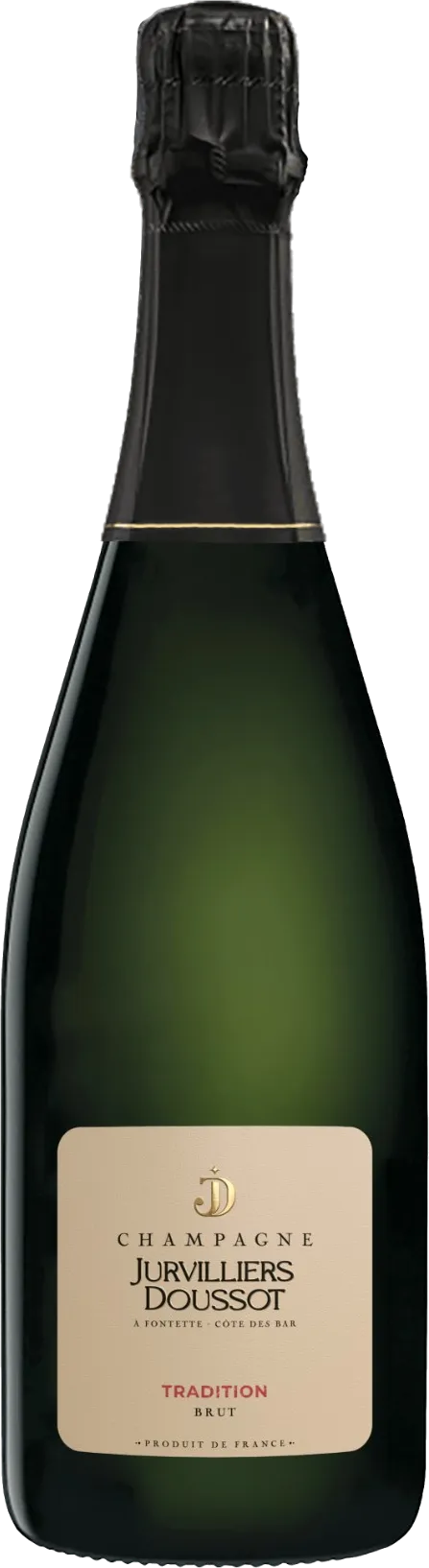 TraditionBrut